



 Safe and Sound Meters
 Sale
Sale
 Shielding Fabric
 SLT Products
 Meters
 Building Material Shielding
 Rob Metzinger Meter Kits
 Medical Magnetic Shielding
9 simple things to do to EMF proof your home
9 simple ways to EMF-proof your home
Over three decades ago, August Brice felt an energetic effect the first time she picked up a mobile phone. Her daughter later discovered the moment on an old family tape. That experience led August to investigate what she had felt—and how to respond to it.
Trained as an investigative journalist, she went on to build one of the country’s first fully EMF-free homes. In 2018, she turned a decade of research into Tech Wellness and now serves on the board of the National Call for Safe Technology.
What set this session apart was that every recommendation was backed by a meter reading. On camera, August measured the smart meter, router, power strip, charging cable and canopy. Nothing was simply claimed; it was shown.
On what EMF is. August compared it to a burning cigarette: the tip is hottest and strongest at the antenna, while the smoke thins as it spreads. Distance is the most dependable protection.
On why man-made EMF is different. Natural EMF from the sun is always present in the environment. Wireless EMF, however, has been altered: it is polarised, coherent, modulated and pulsed. August said this combination is what challenges the body.
On the evidence. More than 2,000 peer-reviewed studies now associate EMF exposure with biological effects, starting with oxidative stress. A World Health Organization review of 52 animal studies became Environment International’s most downloaded paper of 2025 and rated the evidence for increased glioma and heart tumour risk as high.
Working from outside the house to the room where you sleep
Opt out of your smart meter
The biggest single source of EMF in most homes is on the outside wall. August measured her own at a peak of 430,000 microwatts per square metre. Her home wifi, by comparison, read about 25. The meter fluctuates rather than emitting constantly, but the peaks are substantial.
Opting out takes effort. A certified letter, a certified cheque and usually a monthly fee. The physical swap to an analog meter took the technician two minutes and forty five seconds. Around 10 percent of the emission comes out of the back of the unit, which matters if there is a bedroom or a living space on the other side of that wall.
If you cannot opt out, a smart meter cover blocks roughly 90 percent of what emanates from the front. Check August's smart meter guide for the law in your state.
Turn the wifi off, or run a modified one
The largest source inside the house. A standard router pulses ten times per second. August's modified unit pulses once per second, with a fixed channel and narrowed bandwidth, and still gives two bars at twenty five feet.
She told a story from Spain that explains why this matters. She sat comfortably in a packed Starbucks in the EU, then had a colleague measure the identical router model in a US branch. The US reading was extreme. EU regulations require routers to ship at 80 to 90 percent lower power, for interference reasons rather than health ones. The practical conclusion is that most homes are running far more power than they need.
She also flagged wifi sensing, now built into many wifi 6 units. It uses the wifi signal itself to detect motion in a room, adds extra emission on top of normal traffic, and can be accessed by your internet provider and third parties.
Children absorb more. Thinner skulls, and more water in the body, which conducts. August has heard from over a hundred mothers whose children began sleeping through the night after the router went off at bedtime.
Cut the power to your smart TV
Smart TVs contain a wifi module that generally cannot be disabled. August's technical team opened one up to try and concluded that removing it destroys the television.
Switching the TV off is not enough. The module stays live. The only reliable approach is to cut power to it entirely, which she does with one of the buttons on her wifi kill switch.
Stop holding your phone
This section featured Larry Gust, an electrical engineer with thirty years in EMF mitigation and formerly lead educator at the Building Biology Institute.
Magnetic fields from a phone are a point source, so they fall away by the cube of the distance. Moving three feet away reduces exposure roughly 27 times. Gust cited a study of 495,000 people living near power lines which found, at 95 percent confidence, a doubling of childhood cancer rates above 1 milligauss, tripling above 2, and quadrupling above 3. Those are levels commonly found inside ordinary homes.
The latest iPhone has 17 EMF sources. Not all are transmitters, and much of the magnetic emission comes from the electronics behind the screen, which means it continues in airplane mode.
August has not touched her phone directly in years. She uses a capacitive stylus and carries the phone on a strap rather than in a hand or pocket. Avoid any stylus that is itself wireless.
Never use a device while it is charging
Electric fields travel from your home wiring, up the charging cable and into the device you are holding. August measured a phone on a standard charging cube, unplugged it, and watched the field drop to zero.
The fix is grounding rather than avoidance. A grounded charging port eliminates the electric field entirely, which means you can use the device while it charges. The same principle applies at the other end of the cable.
Look under your desk at the power strip
Filmed at the home of Taylor Dukes, a nurse and wellness practitioner now free of brain cancer, whose house Tech Wellness hardwired.
A conventional power strip emits significant electric fields, still reading around 35 at two feet. They tend to sit exactly where we spend the most time. Under the desk by your feet, and beside the bed. A grounded strip reads close to nothing from a few inches away.
The same applies to air purifiers. Powerful filters emit electric fields, so keep three feet of distance, or run them through a grounded charging cube.
Make the bedroom the lowest EMF room in the house
This is where cells rest and rebuild, so it earns the most attention. Some people install a switch that cuts power to the bedroom circuits at night. Others simply unplug everything near the bed, which is what August does in her current home.
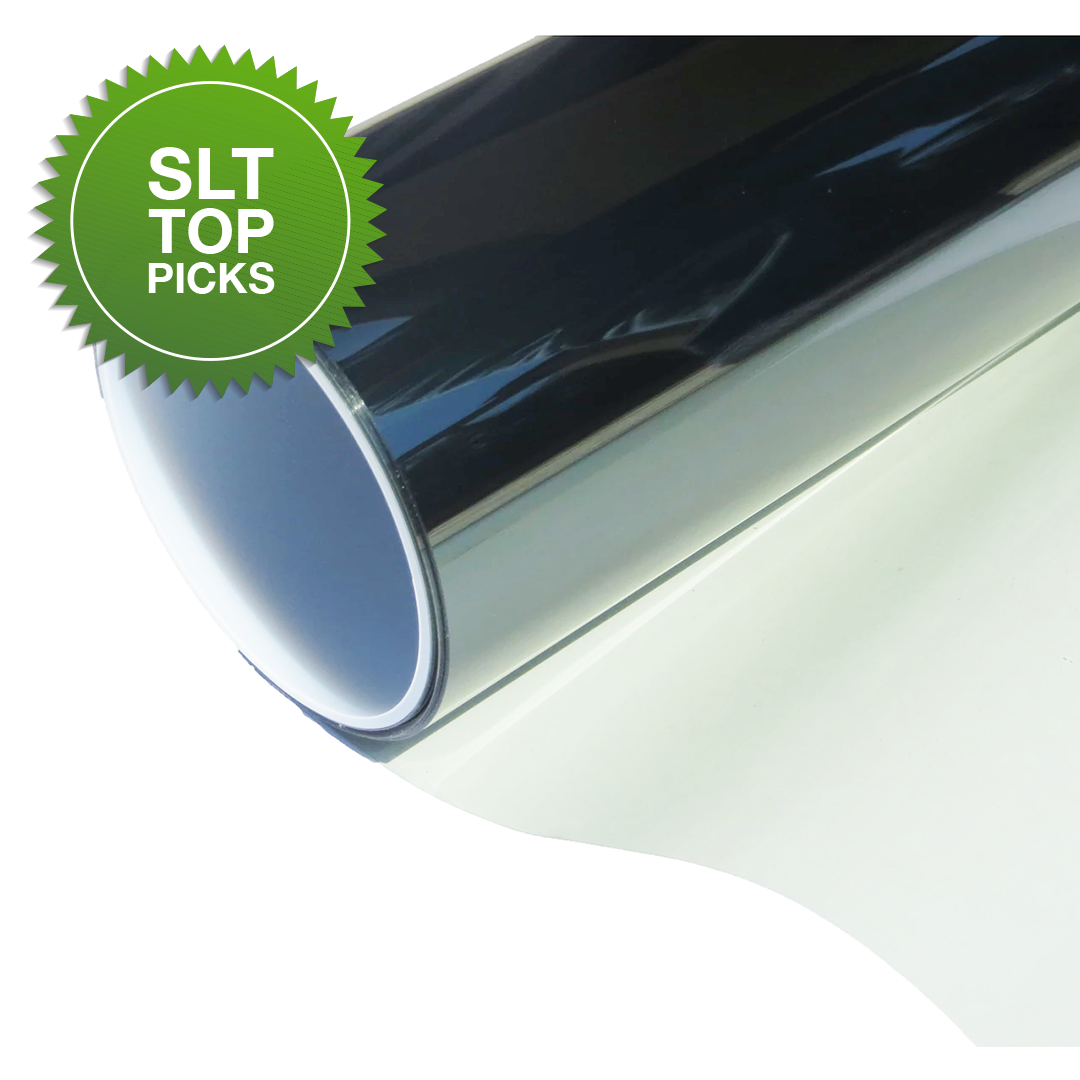
For exposure arriving through the windows from towers outside, she recommends a canopy. Her own reading dropped from 684 to 0.025 once it was closed.
Choose carefully. Avoid canopies that require grounding, which signals a highly reflective material. Avoid all metal versions. And understand that shielding reflects. If anyone brings a wireless device near a canopy, blanket or laptop shield, the energy multiplies and creates hotspots for whoever is outside it.
Above ground floor level you will also need a floor mat, and the canopy should meet it.
Go analog wherever you still can
Appliances. Where possible, open the board and remove the wireless chip. August has done this on a washer, dryer, fridge and stove. Older models often have no wireless at all, which makes secondhand a genuine upgrade.
Thermostat. A Nest contains a small wifi module and a privacy question. A basic Honeywell costs around 25 dollars and is considerably simpler to operate.
Security cameras. Look for power over ethernet rather than wireless.
Baby monitors. The one she asks building biologists to draw a line on. Wireless monitors read low when the room is quiet and go extreme the moment there is sound or motion, which is precisely when the baby is there. Safe distance is 12 to 15 feet, and the parent unit emits as well.
Hardwire, and get hold of a meter
Hardwiring does not require opening walls. Your router has ethernet ports on the back. Run a cable from one of those to an adapter at your device, and you have a wired connection wherever the cable reaches.
The step most people miss is the second one. Plugging in the cable is not enough. You must go into settings and turn off both wifi and bluetooth on the device, or it continues transmitting alongside the wired connection. Everything works this way except a traditional cellular call.
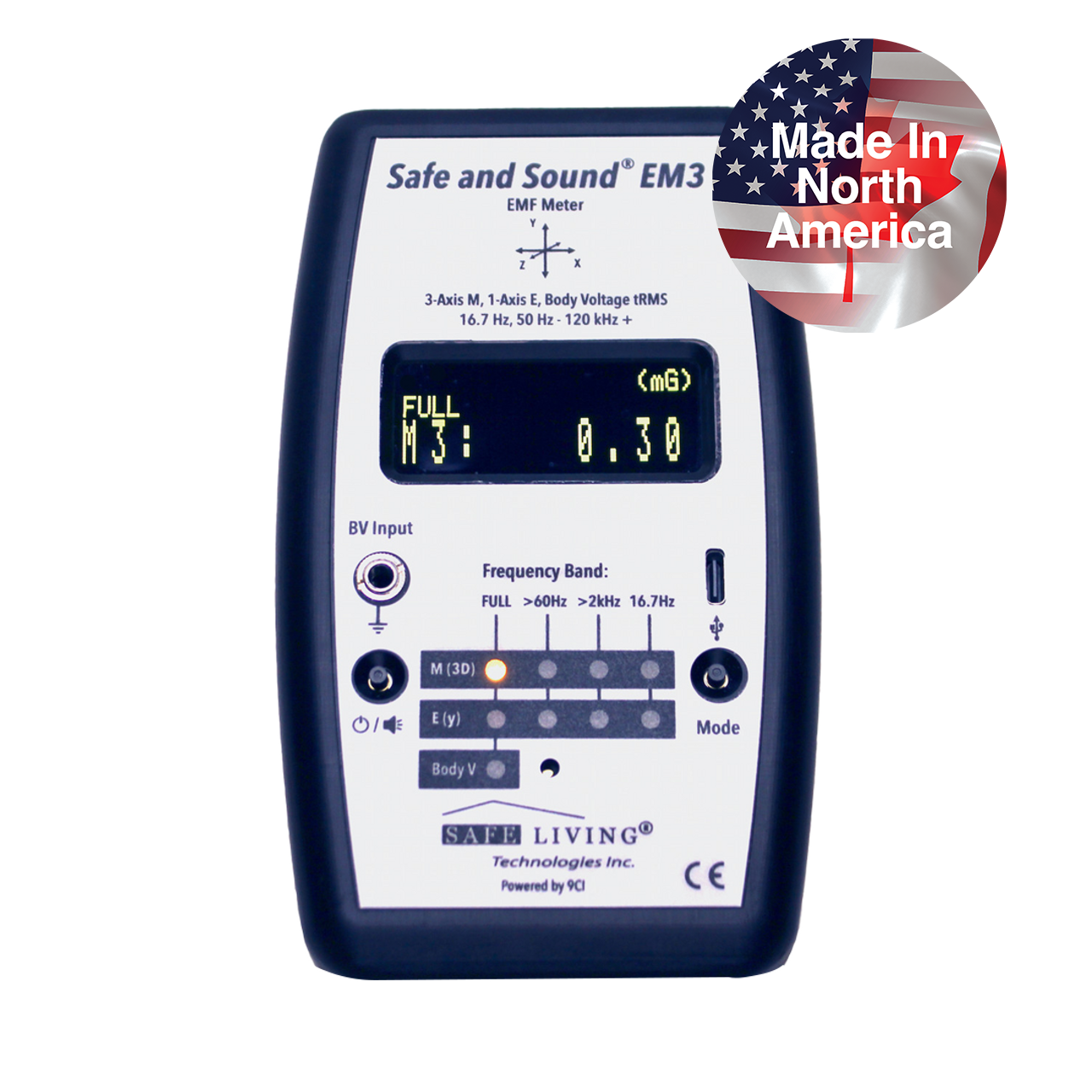
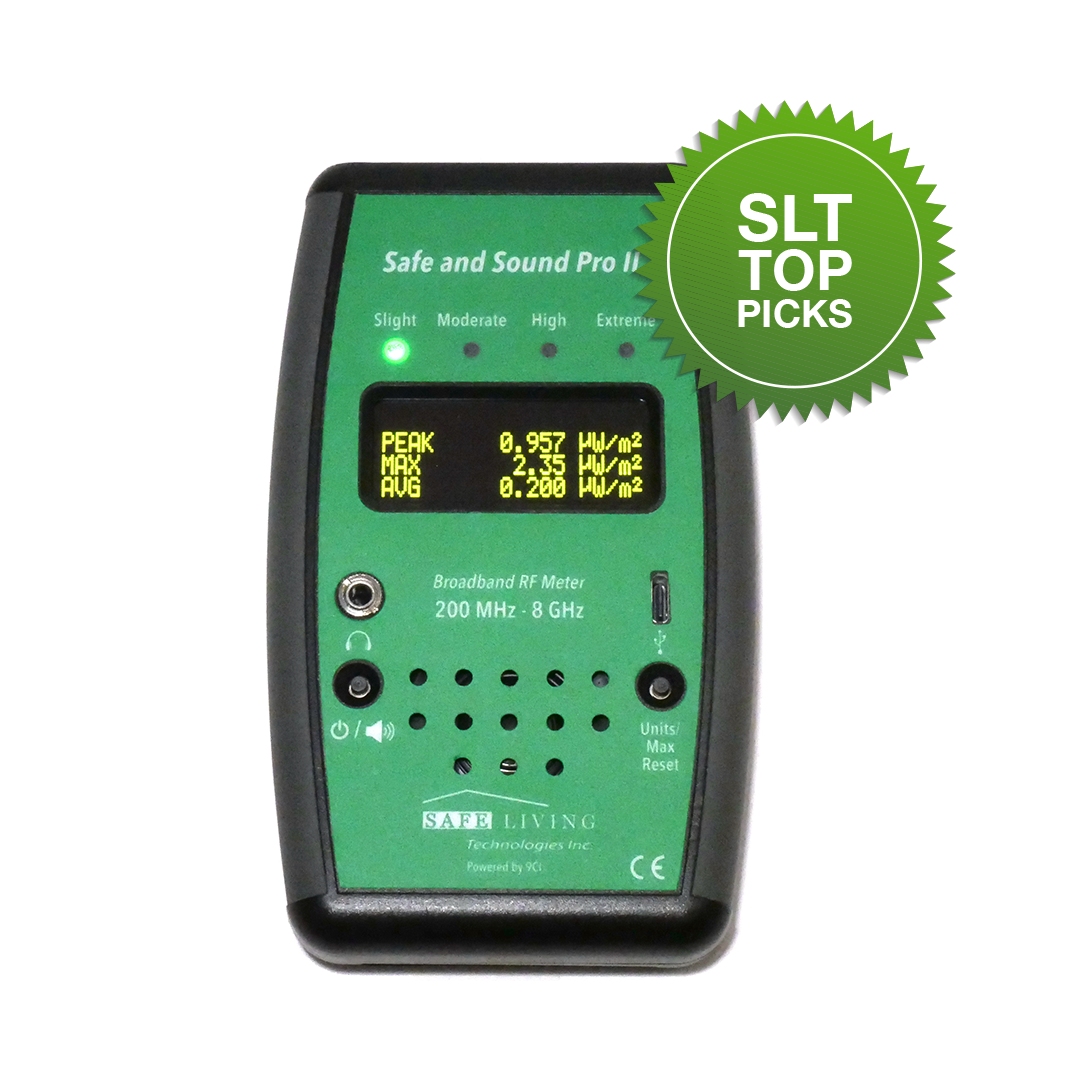
On meters, August was direct. The properly calibrated ones are expensive. Buy one between a group of neighbours or friends and share it. Once you have found the issues in a home you mitigate them, and the meter moves on to the next house.
Sandy's own takeaway from the session was this one. In an apartment building, what your neighbours run affects you, and a shared meter is the most persuasive way to start that conversation.
What the meter actually showed
430,000 → analog
Peak smart meter reading, and the two minute forty five second swap that removed it
10 → 1
Router pulses per second, standard versus modified. EU units ship 80 to 90 percent lower
684 → 0.025
Bedroom reading before and after the canopy was closed
27×
Reduction in magnetic field from moving three feet from a point source
17
EMF sources in the latest iPhone, several of which continue in airplane mode
12 to 15 ft
Distance a wireless baby monitor needs from the cot, and the parent unit from your bed
"Take one of these things. Just one. Every change makes a difference, because this exposure is cumulative. The more we can avoid, the better off we will be."
By August Brice
August's guides on EHS, smart meters and wifi sensing, along with everything demonstrated in this session, are at techwellness.com.